
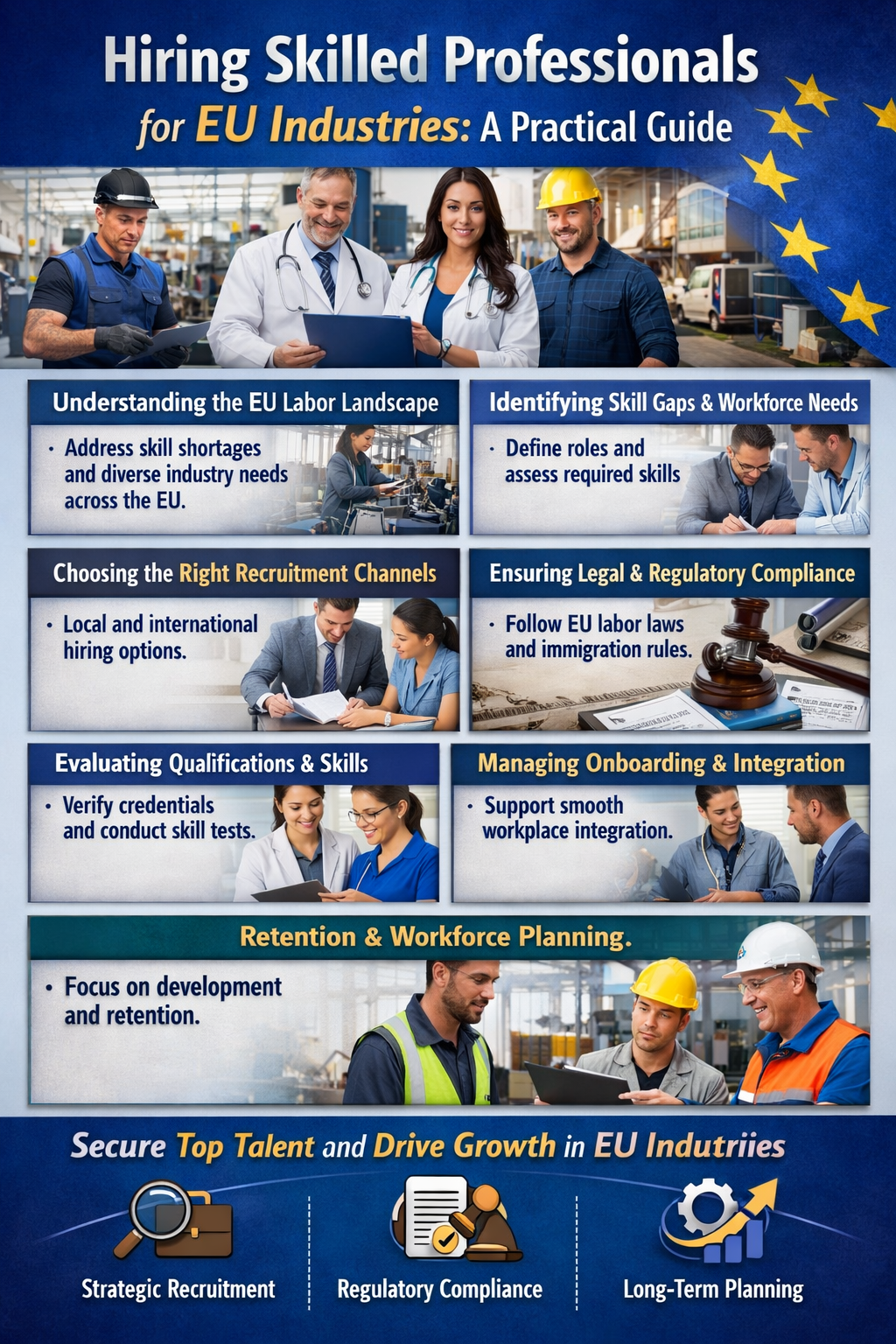
Understanding the EU labor landscape
EU industries operate across diverse labor markets and regulatory environments. Start by mapping the demand in your sector and identifying which countries have persistent shortages for your target occupations. This improves speed and reduces wasted sourcing.
Identifying skill gaps and workforce needs
Define the role requirements clearly. Break skills into must have competencies and trainable areas. Align job descriptions with actual site needs to avoid mismatched hiring and early attrition.
Tip: Convert every job role into a measurable checklist. Skills, certifications, language level, and shift readiness.
Choosing the right recruitment channels
Use a mix of local hiring, cross border EU recruitment, and third country recruitment where permitted. Agencies and manpower partners can provide pre screened profiles and documentation support.
Ensuring legal and regulatory compliance
Compliance varies by country and occupation. Ensure employment contracts, wage levels, working hours, health and safety requirements, and immigration or permit steps are followed. Maintain complete audit ready records.
Evaluating qualifications and skills
Verify credentials and conduct structured assessments. For regulated roles, confirm recognition requirements and licensing. Include trade tests where practical for technical jobs.
- Credential verification and reference checks
- Skill testing and role based interviews
- Language screening for safety and teamwork
Managing onboarding and integration
Strong onboarding improves productivity and retention. Provide safety orientation, supervisor handover, and clear performance expectations. Support integration with accommodation guidance and local registration steps if relevant.
Retention and long term workforce planning
Hiring is only the first milestone. Reduce churn through stable schedules, fair compensation, training pathways, and clear growth tracks. Build talent pipelines and plan recruitment cycles around production demand.
Conclusion
EU hiring works best when it is structured, compliant, and repeatable. Focus on the right role definitions, reliable channels, verified skills, and a strong onboarding system. That combination delivers consistent staffing outcomes for EU industries.